
98 dead, then a reckoning: how Florida's post-Surfside condo laws are landing on owners
Mandatory milestone inspections, reserve rules owners can no longer vote away, and six-figure special assessments. What the law actually says, and what it's costing buildings across the state.
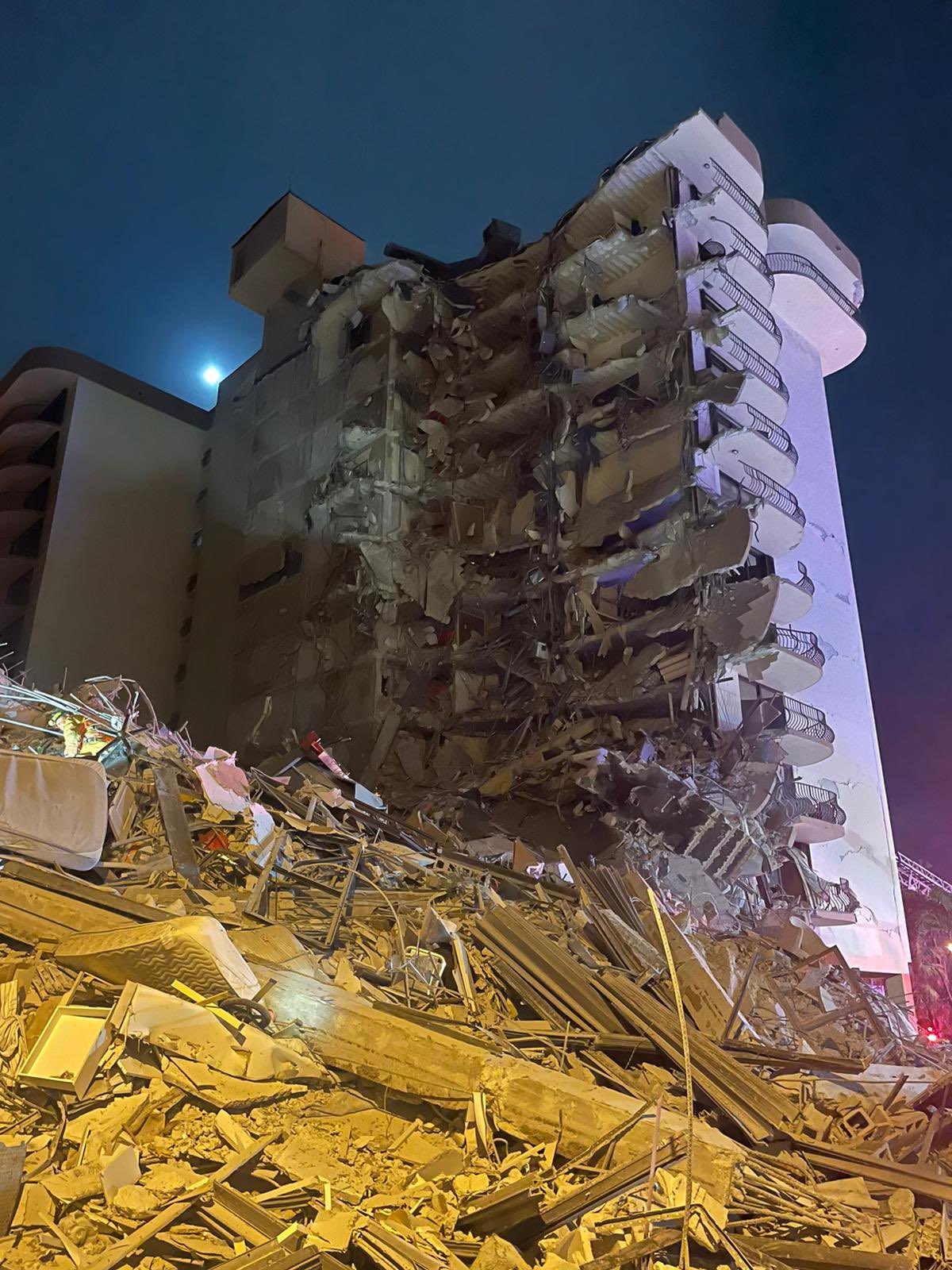

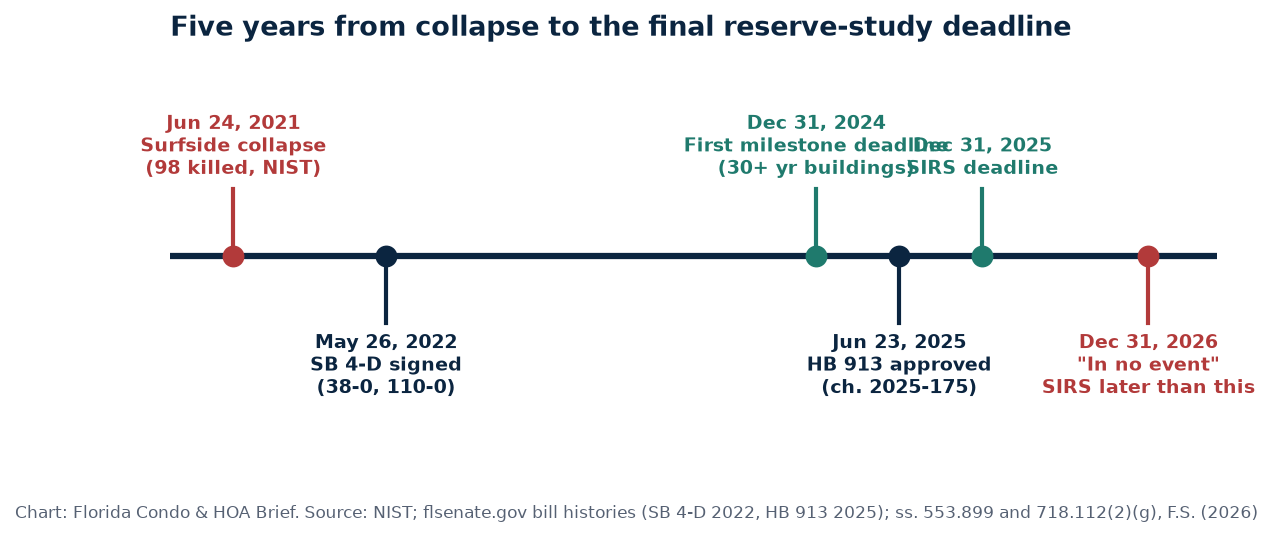
At about 1:30 a.m. on June 24, 2021, a 12-story condominium in Surfside partially collapsed. Federal investigators say it "took the lives of 98 people." Eleven months later, Florida lawmakers passed a building-safety law without a single no vote. Today that law, and the 2025 rewrite that followed, is behind some of the largest repair bills Florida condo owners have ever faced.
What investigators found
On June 22, 2026, the National Institute of Standards and Technology (NIST) released its technical findings. The team "concluded that the collapse began in early June 2021, when two connections between garage columns and the pool deck failed." Investigation co-lead Glenn Bell said: "The low margins against failure were primarily caused by two factors. First, severe and widespread deviations in the building's original structural design from the codes and standards of the day, but also some limitations in those codes and standards. And second, deviations in the building's construction from the design drawings." NIST says its final written report is still being prepared. (NIST, June 22, 2026)
The law: SB 4-D (2022)
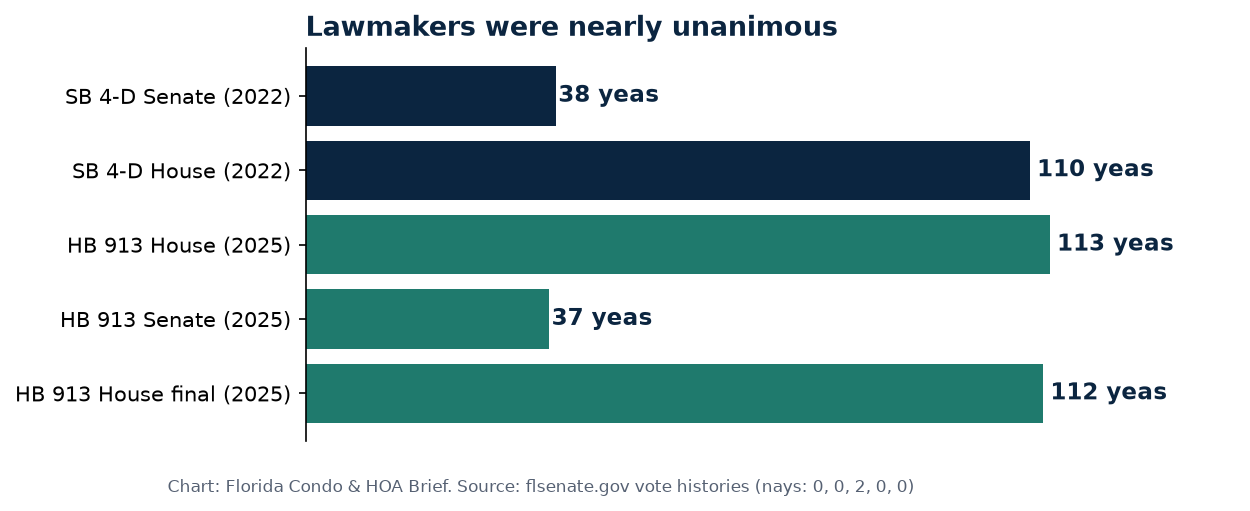
Senate Bill 4-D, "Building Safety," passed the Senate 38-0 and the House 110-0 and was approved by the Governor on May 26, 2022 (Chapter 2022-269). Its summary says it requires "condominium associations and cooperative associations to have milestone inspections performed on certain buildings" and prohibits "certain members and associations from waiving or reducing reserves for certain items after a specified date." (flsenate.gov, SB 4-D)
Milestone inspections
Under section 553.899, Florida Statutes, the Legislature found "that the imposition of a statewide structural inspection program for aging condominium and cooperative buildings in this state is necessary." Buildings "three habitable stories or more" must have a milestone inspection "by December 31 of the year in which the building reaches 30 years of age … and every 10 years thereafter." Local officials may move that to 25 years for reasons including "proximity to salt water." If phase two finds "substantial structural deterioration," repairs "must be commenced within 365 days after receiving such report." (s. 553.899, F.S.)
Reserves owners can no longer vote away
Section 718.112(2)(g) requires a structural integrity reserve study (SIRS) covering the roof, structure, fireproofing, plumbing, electrical, waterproofing and painting, and windows and exterior doors. The deadline is firm: "In no event may the structural integrity reserve study be completed after December 31, 2026."
The bigger change for owners is in 718.112(2)(f): "For a budget adopted on or after December 31, 2024, the members of a unit-owner-controlled association that must obtain a structural integrity reserve study may not determine to provide no reserves or less reserves than required by this subsection" for those items. For decades, owners could vote to waive reserves. The statute's required proxy warning says why that mattered: "WAIVING OF RESERVES, IN WHOLE OR IN PART, OR ALLOWING ALTERNATIVE USES OF EXISTING RESERVES MAY RESULT IN UNIT OWNER LIABILITY FOR PAYMENT OF UNANTICIPATED SPECIAL ASSESSMENTS REGARDING THOSE ITEMS." (s. 718.112, F.S.)
The 2025 fix: HB 913
CS/CS/HB 913 (2025), "Condominium and Cooperative Associations," passed 113-2 and 112-0 in the House and 37-0 in the Senate, and was approved by the Governor on June 23, 2025 (Chapter 2025-175). (flsenate.gov, HB 913) Current law, as amended through 2026 (the statute's history lists ch. 2024-244, ch. 2025-175 and ch. 2026-14), now gives associations some breathing room:
- Reserves for SIRS items "may be funded by regular assessments, special assessments, lines of credit, or loans."
- "For a budget adopted on or before December 31, 2028," an association that finished a milestone inspection in the prior two years may, with majority owner approval, "temporarily pause, for a period of no more than two consecutive annual budgets, reserve fund contributions" to pay for the repairs.
- An association may "delay performance of a required structural integrity reserve study for no more than the 2 consecutive budget years immediately following the milestone inspection."
- Items with a remaining useful life "greater than 25 years" don't need replacement reserves.
What it's costing: three buildings
The statutes set the rules. These cases, reported by South Florida news outlets and the courts, show the fights they can produce. Each has its own full report:
- The Galleon, Fort Lauderdale. CBS News Miami reported a repair "that began at $1.6 million has grown into a $36 million overhaul," with assessments "between $135,000 and $320,000 each."
- 1060 Brickell, Miami. The Real Deal reported a $21 million assessment, a board recall, and an October 2026 lawsuit against the contractor.
- Biscayne 21, Edgewater. Not a repair bill but a termination fight. The Biscayne Times reported that the amendment came as older condos "were subject to new condo safety laws," which "increased assessment and insurance costs for older condos."

What owners can do now
- Ask your board for the milestone inspection summary. The law requires it to be distributed within 45 days of receipt.
- Ask for the SIRS, or the notice that it's available. That's also due within 45 days.
- Check any notice of a meeting about assessments. It "must specifically state that assessments will be considered and provide the estimated cost."
- Read DBPR's official guides on our Resources page.
This report summarizes Florida statutes and official sources. It is not legal advice. Figures for individual buildings are as reported by the named outlets and have not been independently verified by the Brief.